


"I set it up on Monday, invited the team on Tuesday, and by the following Monday everyone was checking the leaderboard and talking about the challenge."
Sarah M.
HR Manager
Bring your team together and promote wellbeing with a fun, easy-to-use step challenge app.
Loved by 1,500+ companies
Trusted by teams at



5 min
Setup Time
1,500+
Companies
Build your challenge by selecting the features you need. Get a fully tailored solution—and pay only for what you use.
Rank everyone solo, or group employees into competing teams.
Set any start and end date. Run a one-week sprint or a month-long challenge.
Choose rewards for your top performers. WeMove tracks and announces them.
Your team walks toward a real destination on a live interactive map.
Members earn points redeemable for gift cards from Nike, Amazon, Starbucks, and 50+ brands.
Daily leaderboard and team milestones posted to your Slack channel automatically.
Your team is different. Your challenge should be too.
Start building your challengeSeamless Syncing
WeMove syncs with Apple Health on iOS and Health Connect on Android. This means Fitbit, Garmin, Apple Watch, Samsung Galaxy Watch, and other wearables automatically feed steps into the app. No wearable? Phones track steps natively. Everyone can participate with whatever device they already use.
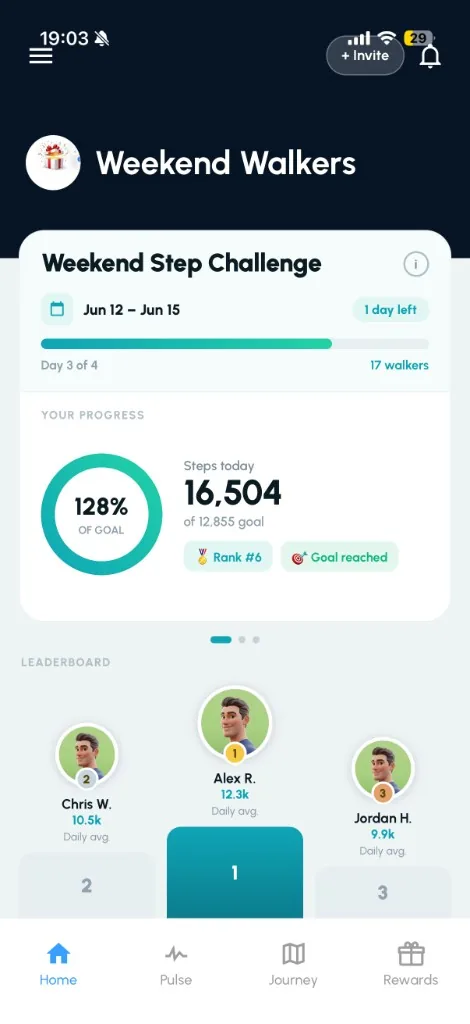
Run a fair step challenge your way—solo rankings, team vs team, or both. Switch anytime from one leaderboard.
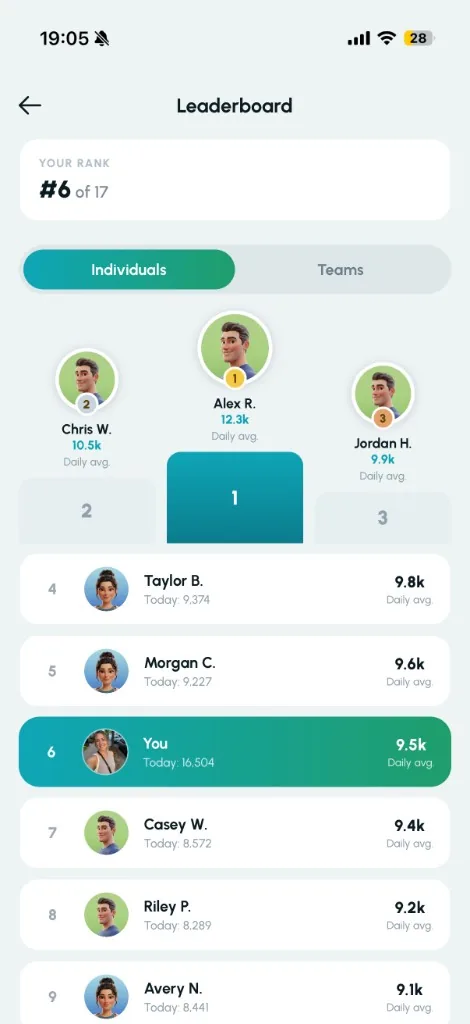
Choose a friendly individual leaderboard, team vs team, or run both—members switch between Individuals and Teams tabs in the app.
Share a single invite link via Slack, email, or QR code. Your team joins in seconds — no complicated onboarding.
Steps sync automatically in the background. AI anti-cheating keeps it fair. Everything you need to enjoy a stress-free step challenge.
Members motivate each other, share activities, and spark conversations—so participation stays high without you chasing people.
Members create their own mini challenges to push each other—weekend step goals, streaks, and friendly team bets between official programs.
Connect wearables or log workouts manually. Steps, runs, cycling, and more appear in the team feed for everyone to see.
Every activity is a reason to cheer and interact. Fitness becomes daily team bonding—for remote and in-office colleagues alike.
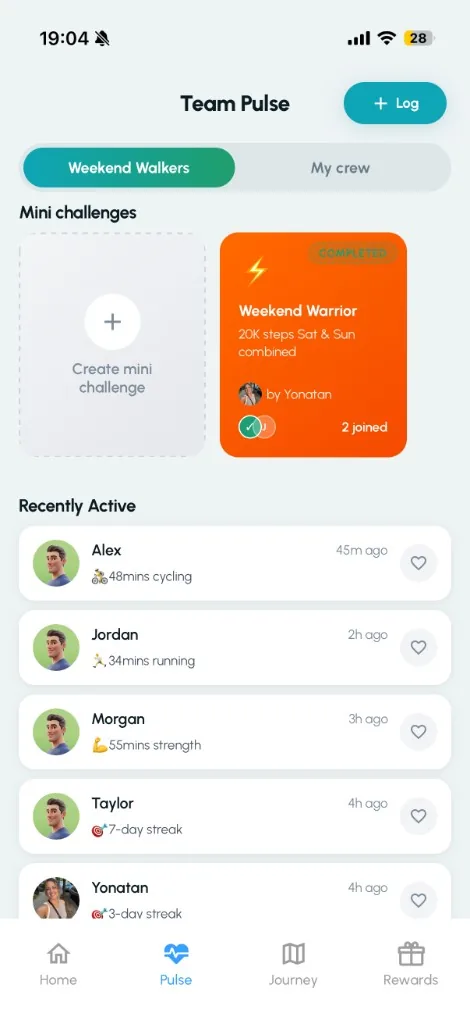
Team Pulse
Team Pulse keeps your challenge alive between leaderboard checks. Members post activities, launch mini challenges, and cheer each other on—building the kind of connection that makes wellness programs actually stick.
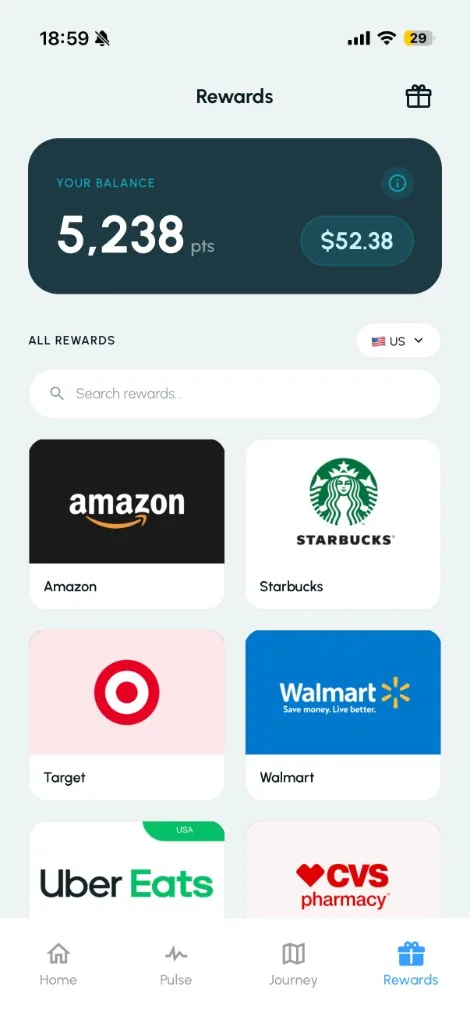
Built-in recognition
Help people feel appreciated—not just for moving more, but for showing up for each other. Reward cheers, team support, and everyday engagement that builds real workplace community.
Teams using rewards are 3× more engaged on average.
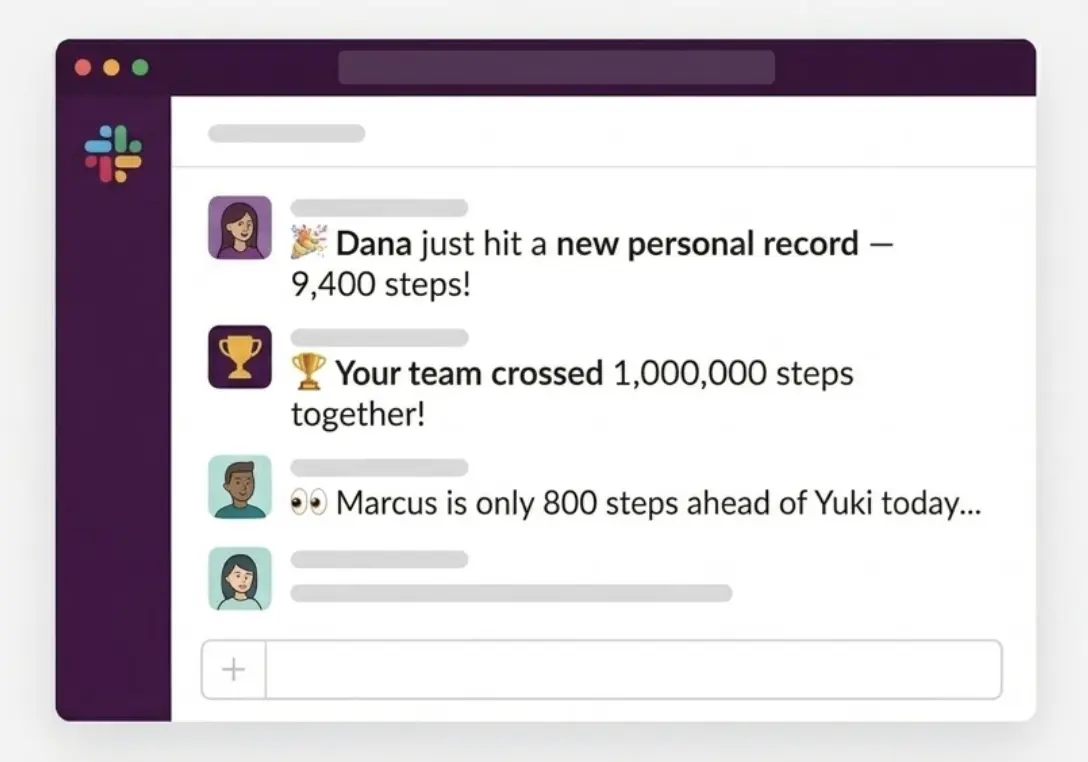
Keep your team engaged without leaving Slack
Included with all plans
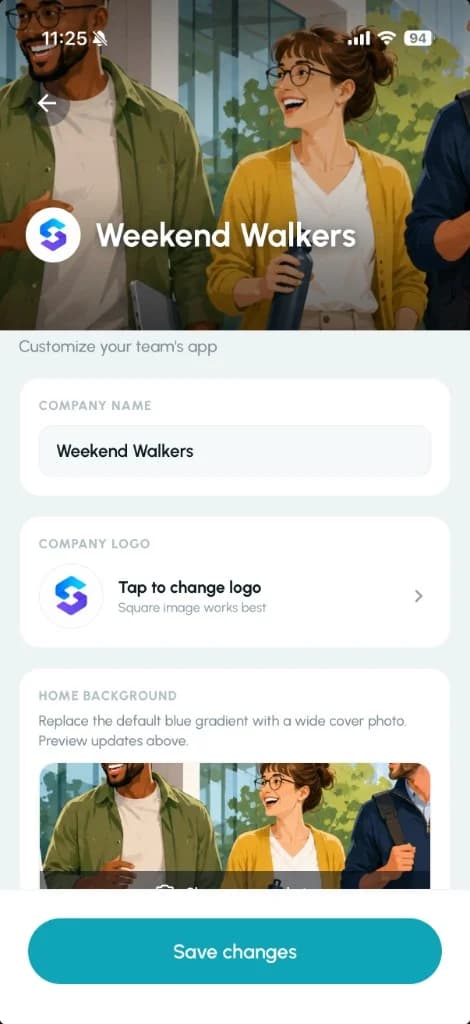
White-label branding
Make the app feel like yours—not a generic wellness tool. Admins customize company name, logo, and home background from one screen, with a live preview before anything goes live.
Your team opens an app that looks and feels like your brand, which drives adoption and makes the challenge feel like a real company initiative.
Challenge type
Give admins a challenge format with purpose. Set a charity, memorial walk, or company mission—and let the whole team raise funds together through movement.
Every step converts into donations on a live progress bar, so participation feels meaningful beyond the leaderboard. Support the causes your people care about, all in one platform.
Live cause challenge
Every step counts toward your team goal
0
of 2M goal
Donation raised
$0
$0.005 per step
Steps sync automatically · Donation total updates in real time
We don't show ads to your team. We don't sell your company's data. We follow GDPR and HIPAA guidelines to ensure a safe environment for employees to thrive.
Your employees will never see ads inside the app. Their wellness experience stays clean and distraction-free.
We never sell, share, or monetize your company's data. Period. Your information is used solely to power your challenges.
Built to meet the highest privacy standards. Your employees' health data is encrypted, protected, and handled with care.
"I set it up on Monday, invited the team on Tuesday, and by the following Monday everyone was checking the leaderboard and talking about the challenge."
Sarah M.
HR Manager
"We compared a few platforms. WeMove was the easiest to set up and the team actually used it — 89% of our employees joined in the first two days."
James R.
People Operations Lead
"The Slack integration alone made it worth it. Employees who never talked about wellness were suddenly competing and cheering each other on."
Emily W.
Office Manager, Financial Services
Or run a single 4-week challenge — one-time price, no subscription.
Everything you need to know about running a walking challenge at work.
Same device for everyone — fair competition your team can trust.
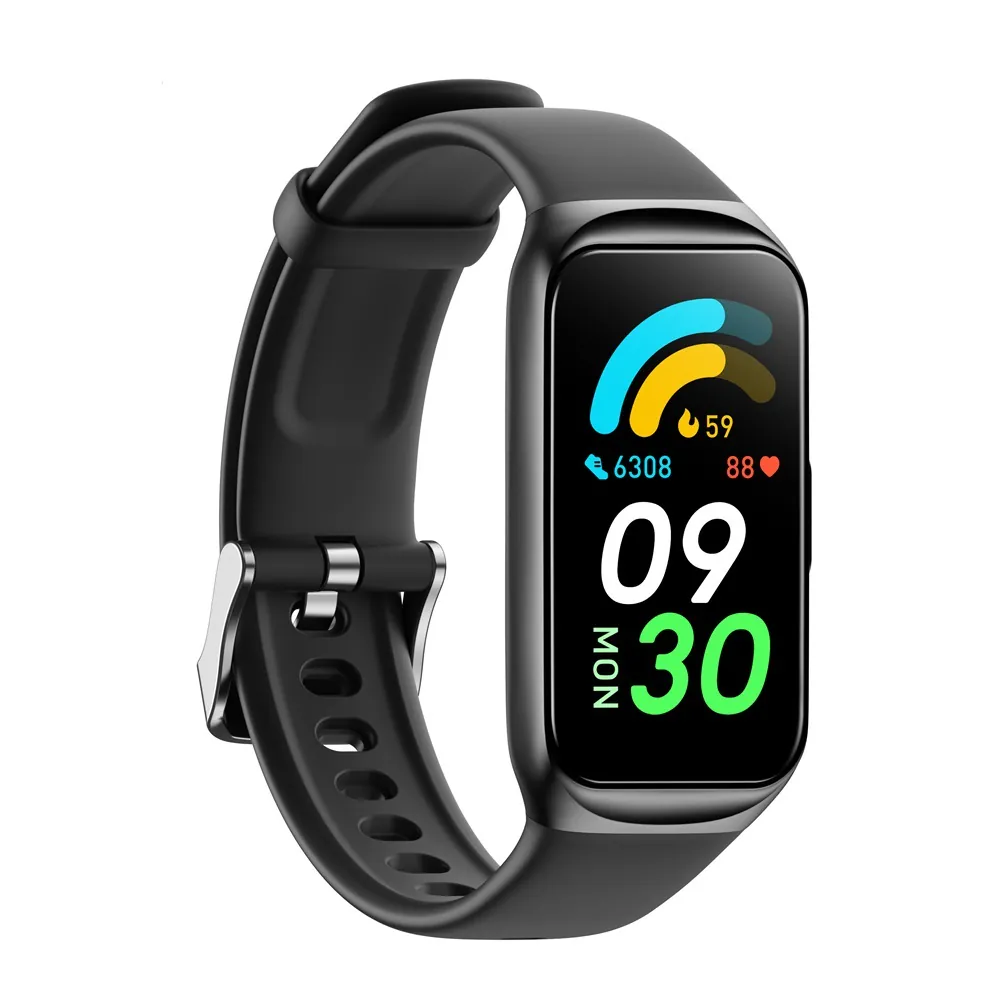
For companies that want 100% accuracy and a stronger wellbeing impact, the MoveBand is a dedicated fitness tracker shipped directly to every employee.
Every employee tracks with the same device. Accurate, consistent, competition-ready.
Tracks heart rate, sleep, stress, and blood oxygen — not just steps.
Employees use it long after the challenge. A lasting investment in their wellbeing.